Trading Hours
Mon - Fri: 8:30am - 5:30pm Sat: 8:30am - 5:00pm
Free Consult for Full Mouth Rehabilitation, Cosmetic/Smile Makeover, Dental Implants, All-on-4/5/6, and Aligners/Invisalign.

Mon - Fri: 8:30am - 5:30pm Sat: 8:30am - 5:00pm
Free Consult for Full Mouth Rehabilitation, Cosmetic/Smile Makeover, Dental Implants, All-on-4/5/6, and Aligners/Invisalign.
Your smile may influence personal self-perception and social interactions. Individuals with concerns such as discolouration, chipped teeth, or uneven tooth appearance may seek general information about dental veneers as one possible treatment option.
Patients may visit Keys to Smile to obtain general information about dental veneers in Keysborough. This information may include an explanation of the types of veneers available and general factors that may be considered prior to treatment. Any decision to proceed with dental veneers is made by the patient following a comprehensive consultation, clinical examination, and professional assessment by a qualified dental practitioner.
Dental veneers are thin restorations bonded to the facial (front) surface of teeth. They are commonly fabricated from tooth-coloured materials such as composite resin or porcelain and are designed to integrate with adjacent dentition.
Veneers are categorised as cosmetic dental procedures. When clinically suitable, they may be used to address selected aesthetic concerns.
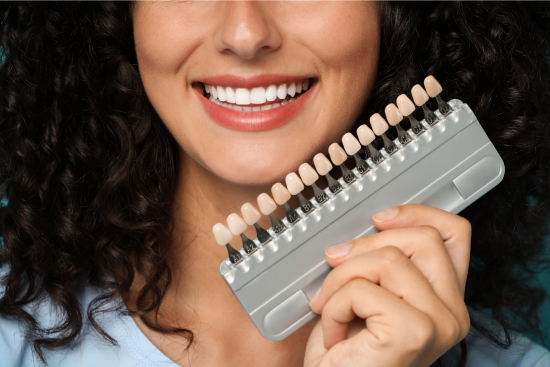
When considering dental veneers in Keysborough, several veneer types may be discussed during a consultation.
Custom fabricated ceramic restorations. Placement generally requires removal of a limited amount of enamel to accommodate the material thickness.
Fabricated from tooth coloured resin and bonded directly to the tooth surface. These may require minimal tooth preparation, although material wear or colour change may occur over time.
Ceramic restorations are manufactured from zirconia-based materials. These may be considered where increased material strength is required, subject to case selection.
Custom fabricated removable appliances designed to fit over existing teeth. These are typically temporary and do not involve irreversible tooth preparation.
Very thin ceramic restorations that may be placed with little or no enamel reduction. Suitability is dependent on tooth position, occlusion, and periodontal considerations.
Selection of veneer type is influenced by multiple clinical factors, including:
Patient expectations and preferences
A dental assessment is required to determine clinical suitability.
Veneers work by covering the visible surface of the tooth. This may alter the appearance of colour, shape, or size, depending on the individual’s needs and clinical suitability.
Dental veneers may be considered, subject to suitability, for patients seeking aesthetic modification of anterior teeth presenting with:
Veneers are not indicated for all patients. A comprehensive dental assessment is required before consideration.
Patients exploring dental veneers in Keysborough can expect the following stages:
A dental assessment is undertaken to evaluate oral health and discuss whether dental veneers may be clinically suitable.
If required, a small amount of enamel may be conservatively removed to allow space for the veneer.
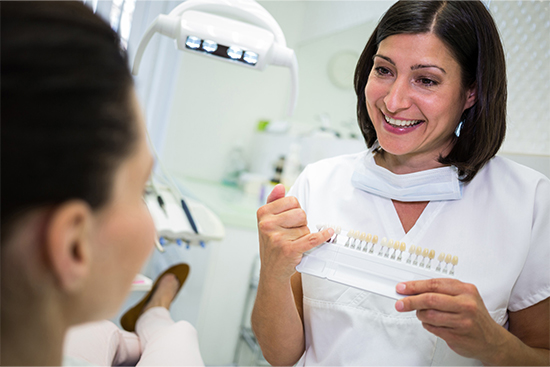
Dental impressions are taken, and the shade is selected to achieve a natural match with surrounding teeth.
The veneers are bonded to the teeth, with an assessment of fit, occlusion, and patient comfort.
When clinically appropriate, dental veneers may provide:
Results vary between patients. The lifespan of veneers depends on oral hygiene, bite forces, and following dental advice.
Here are some recommendations for keeping your veneers looking and feeling great:
If you are thinking about dental veneers in Keysborough, a consultation gives you time to talk about your oral health and what you would like to achieve. Suitable options can be explained based on your needs and dental findings.
Any treatment decision is patient-led and informed, guided by your preferences.
Veneers are not for everyone. Your dentist will check your teeth, bite, and oral health to see if they are a good option for you.
You might feel some mild sensitivity or discomfort at first. This usually goes away in a few days.
Dental veneers are long-term restorations but are not permanent. Replacement may be required over time due to normal changes in the teeth or gums.
Yes. The shade is selected in consultation with the dentist to achieve a natural appearance that matches surrounding teeth.

